top of page
Common Questions
What is Manual Osteopathy?
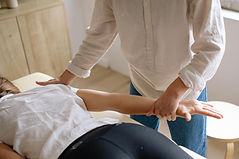
A manual, hands-on sequence of techniques used to balance the body's structure and improve its function. The primary goal is to treat the person as a whole; this practice model is designed to support long-term, efficient self-healing.

How can Manual Osteopathy help me?
Manual Osteopathy takes the long road with treatment, assessing the causes of discomfort down to the nerve and fluid pressure level. With MO, care starts in the most preliminary phases of manual care in a gentle, non-invasive manner.
What are the foundational principles?
Osteoarticulation Correction:
The correction of alignment points of dysfunctional bony structures that may be causing adverse muscle and nerve responses, which can reduce general discomfort.
Myofascial Remodelling:
Fascia is a prominent network of connective tissue within the human body, working to provide structural support, force distribution, and general flexibility. Its continuous nature means that areas of stress can directly impact the function of distant locations within the body. Manipulation is performed to better support force distribution and lines of tension within the body.
Involuntary Systems Manipulation (CranioSacral Support):
Spinal fluid flows on its own (involuntarily) between the skull and the sacrum through the spinal cord. There are times when the bony structures of either location move into dysfunction, impeding proper pressure levels and cerebrospinal fluid reabsorption; a fluid that is important for proper nourishment and protection of the brain and spinal cord. Manipulation is performed to realign these structures and induce relaxation through the central nervous system.
Visceral Manipulation:
Organs play a major role in the overall health of the body, providing the brain with important feedback for function. A Manual Osteopath, or someone trained in VM, can manipulate their movement patterns, arterial (blood) and nerve responses, effectively reducing potential strains elsewhere in the body and improving general organ function.
Did you know the gut is referred to as the second brain, as the complexity of the neurons and neurotransmitters within the enteric nervous system (ENS) rivals the complexity of the brain?

What are the booking policies?
No Show: Failure to attend a scheduled appointment without prior, approved notice.
The Full Service Price will be charged.
Late Cancellation: Should you fail to request a rebooking or cancellation within 24 hours of your scheduled appointment time,
50% of The Full Service Price will be charged.
Late Arrival: Should you fail to arrive within the 15-minute grace period, the appointment will remain within the booked time slot and will not be extended. Significant arrival past the allotted grace period may require a rebooking.
50% of The Full Service Price will be charged.
A credit card on file is required for booking.
No Cash Payments.
The booking policies help to protect my small business from late cancellations and no-shows, safeguarding my practice and income. Should you have any questions or concerns about the booking policies, contact me through 'Contact'.
Thank you for your understanding and support.

bottom of page